
- Current Projects
- Using remote sensing to study urban forest health and resilience in Chicago
- Tree structure and diversity in California’s Urban Forests
- Tree equity in California’s urban forests
- Completed Projects
- Urban Forestry
- Using herbarium specimens to assess phenological responses to climate and climate change in plants
Current Projects
Using remote sensing to study urban forest health and resilience in Chicago
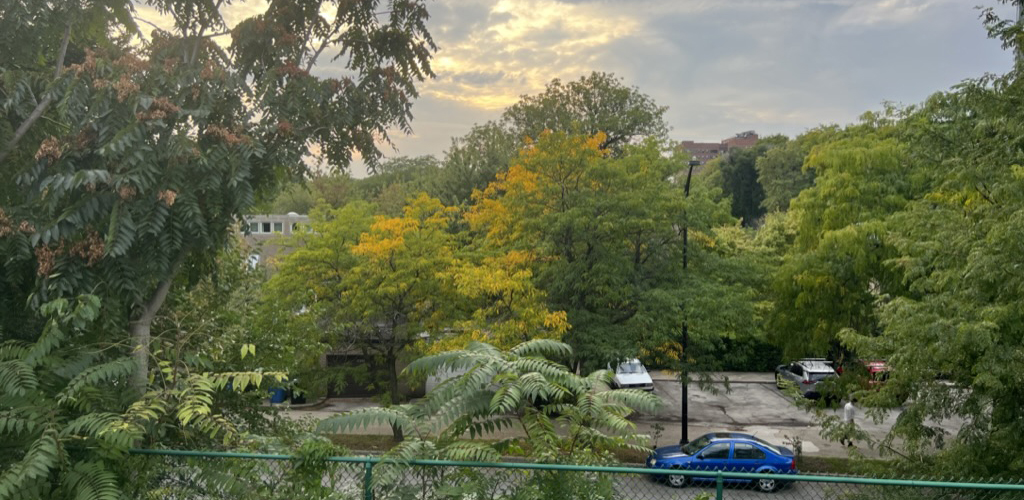
Using high-resolution satellite data, I am assessing the stability and resilience of urban forest canopy health in the Chicago region with vegetation indices like EVI and NDVI. In a preliminary analysis, I found that mean EVI, a proxy for canopy health varies, among census tracts in Chicago and that it relates to median household income. Wealthier census tracks tend to have less healthy vegetation. I will also combine remotely-sensed data with on-the-ground inventory data to see if patterns detected from space can be explained by species composition on the ground.

Tree structure and diversity in California’s Urban Forests
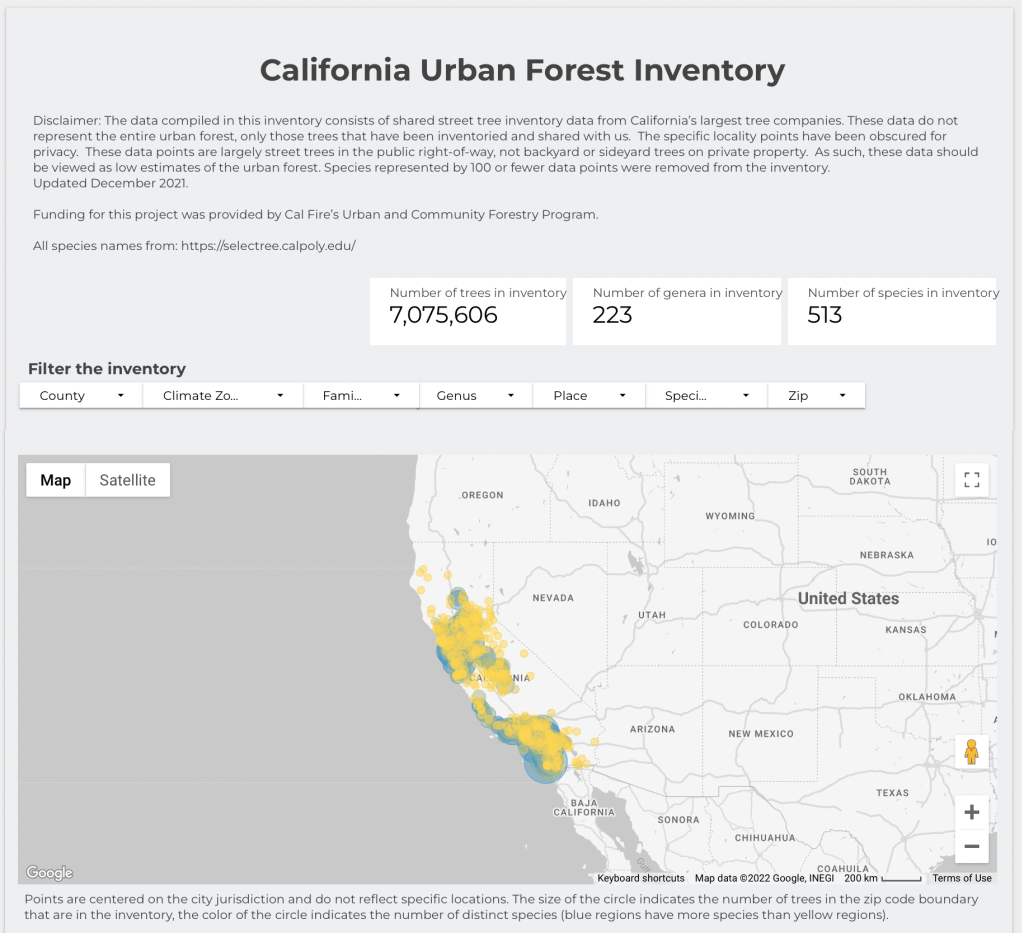
Assessing structure and diversity in California’s urban forests using the California urban forest inventory
We compiled a dataset of over 7 million individual urban tree records, called the California Urban Forest Inventory, to assess trends in urban tree diversity and structure at several spatial scales in California. We found that California’s urban forest is among the most diverse in the world, with over 513 species and 223 genera represented by more than 100 individuals throughout the state. This is a highly collaborative effort among biologists, computer scientists, geographers, and economists at Cal Poly as well as funders (CAL FIRE and USFS) and stakeholders in the private arborist industry.
Explore the California Urban Forest Inventory with our interactive tool!
Publication: https://doi.org/10.1016/j.ufug.2022.127679
Individual tree detection in California’s urban forest
We developed novel deep learning method to automatically detect all individual trees in California’s urban forest using high-resolution multispectral aerial imagery. We estimate that there are 43 million trees in California’s urban forest, about one for every resident. This is a highly collaborative effort among biologists, computer scientists, geographers, and economists at Cal Poly.
Check out our tree detector tool where you can explore the detected trees anywhere in California’s urban landscape.


The suitability of urban tree species to California’s current and future climates
California’s urban forests need to be resilient to changes in climate so that canopy cover and thus benefits to surrounding communities are maintained in the future. We are assessing the suitability of 200 of the most common urban tree species in California by analyzing their climatic niches in both their urban and native populations. To accomplish this, we are using occurrence data from the California Urban Forest Inventory and GBIF as well as current and future climate data from CHELSA.
California’s native tree diversity and what it means for urban forests
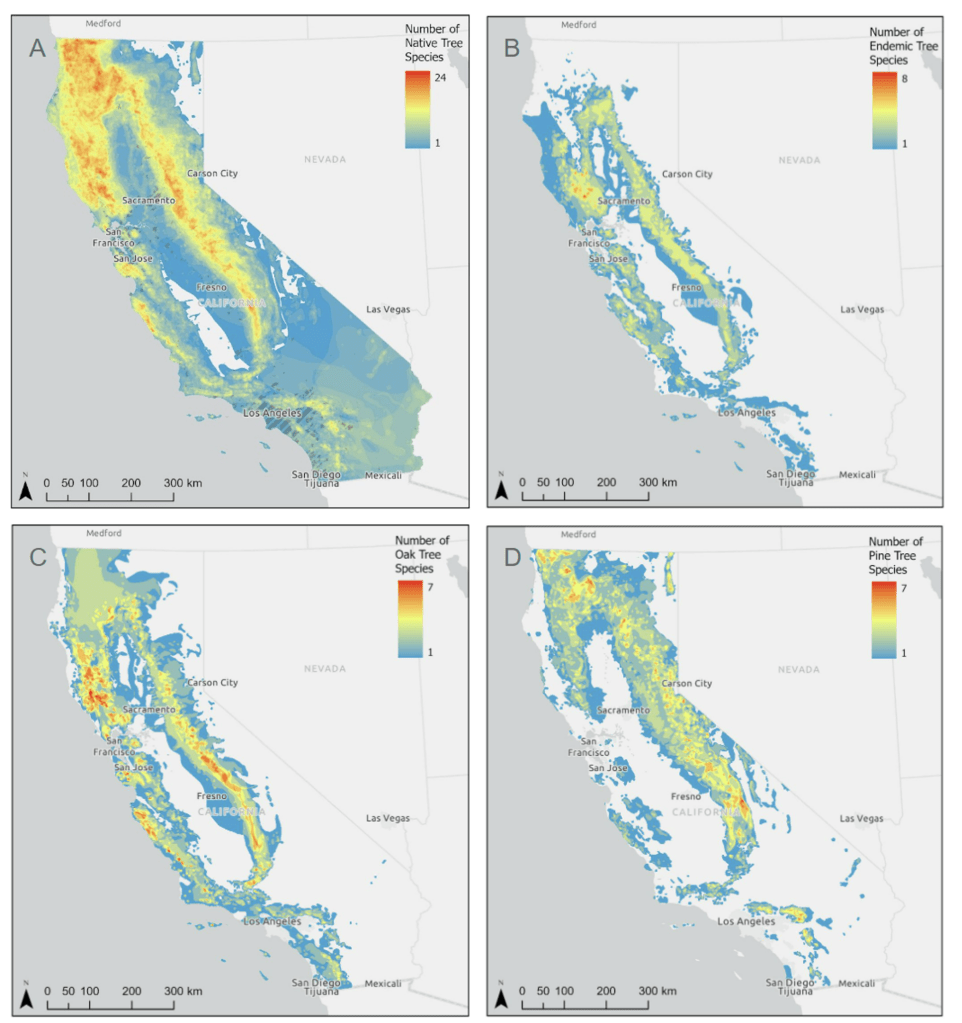
We created high-resolution digital range maps for all of California’s 94 tree species to generate species richness heat maps. We used these data to create locally-native urban tree species lists for each census designated place in California. We found that relatively few species were native to the boundaries of each city. On average, six tree species are native to individual cities in California.
Check out our web application that shows locally-native species lists for cities as well as ranges for all 94 tree species.
Economic contribution of urban and community forestry in California
We are collaborating with funding partners California ReLeaf, CAL FIRE, and the US Forest Service to assess the economic contribution of urban and community forestry in California during 2019.
Project website: https://californiareleaf.org/about-releaf/research-project/
Using UAVs and real-time dendrometers to assess urban forest health
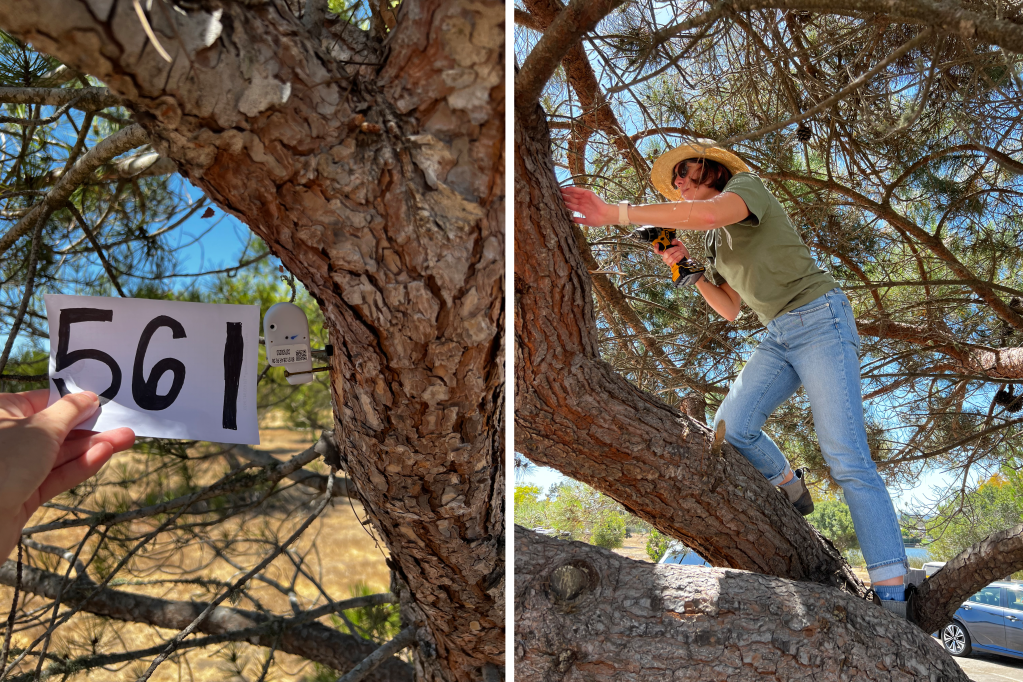
We are using high-resolution NDVI data captured from UAVs flown by Cal Poly undergraduates in combination with real-time dendrometers to assess the health of individual trees in Laguna Lake Park.

Trends in urban tree and urban bird distributions in California
We investigated the relationship between urban bird diversity and urban tree diversity with a team of undergraduates from the computer science department at Cal Poly. Using data from the California Urban Forest Inventory in combination with eBird occurrence data, we found that the strongest predictors of bird diversity in urban areas was the total tree number, tree diversity, and tree species evenness in the urban forest.
Tree equity in California’s urban forests
Spatial patterns in tree density and the distribution of public vs. private urban trees: Implications for tree equity in California
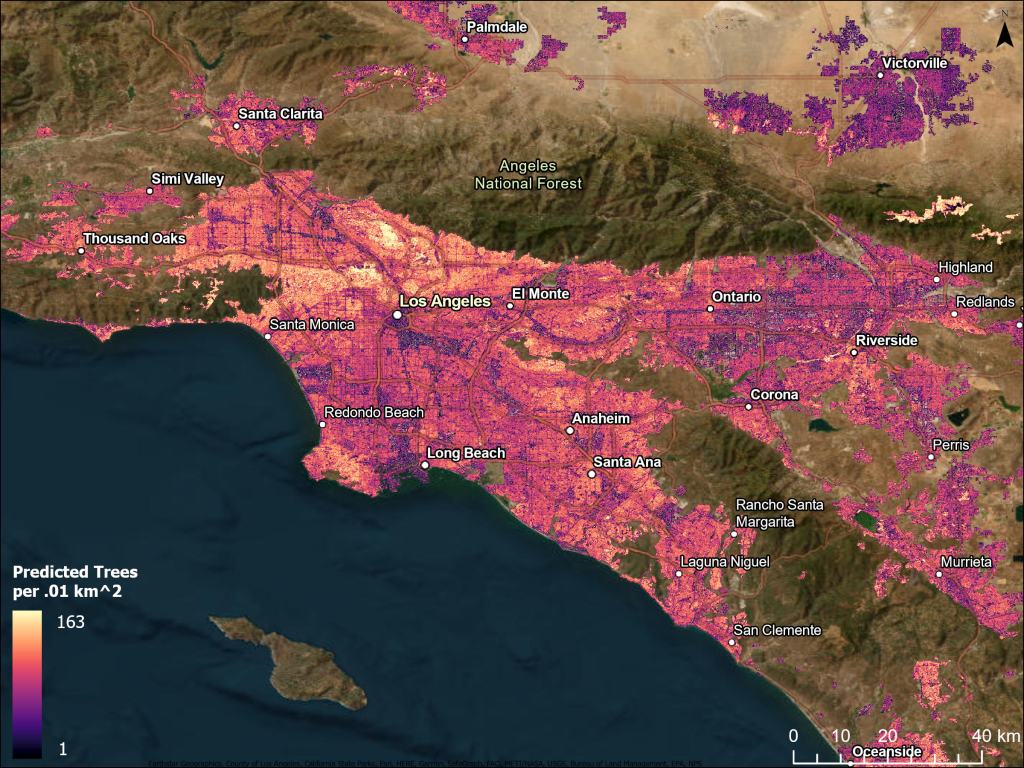
We are using the output from out tree detector tool to assess patterns in tree density and trees per capita at multiple scales in California. Among the top 50 most populous cities in California, we found that the density of trees ranges from 454 to 3,452 trees per km2 and the number of trees per capita ranges from 0.25 to 1.75 trees per person. We will also use these data to assess the proportion of public vs. private trees among cities in California as well as how that varies with socioeconomic factors.
Street trees and urban heat
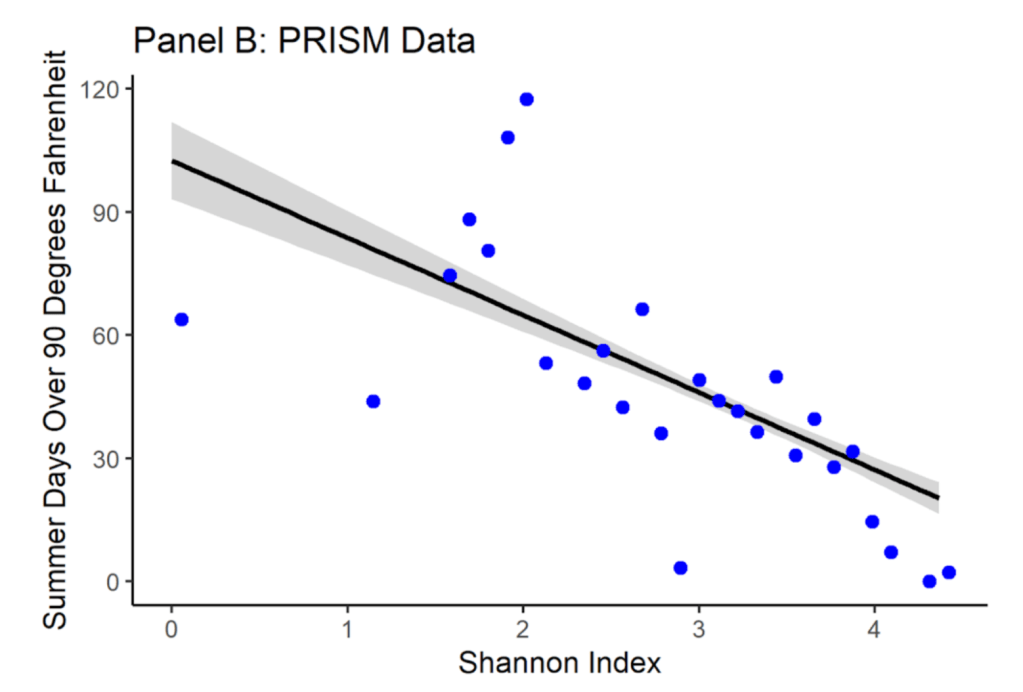
Using street tree data from the California Urban Forest Inventory and daily climate data from PRISM, we found preliminary evidence that street tree diversity mitigates urban heat independent of canopy cover. This work suggests that increasing street tree diversity may be one strategy to help mitigate urban heat, especially in neighborhoods with low canopy cover.
This manuscript is currently under review in Urban Forestry & Urban Greening
Assessing the relationship between socioeconomic factors and street tree diversity in Southern California
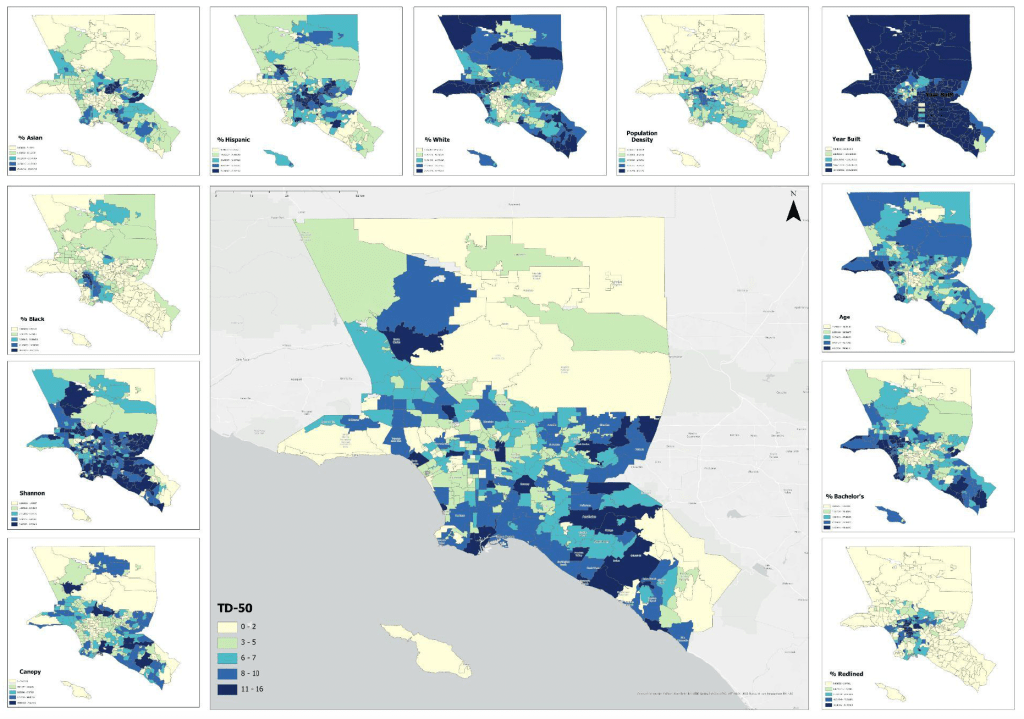
Using street tree data from the California Urban Forest Inventory, we assessed the equitable distribution of tree diversity in Southern California communities. Although we found inequitable distribution in canopy cover, there was little evidence that street tree diversity was related to socioeconomic and sociodemographic factors such as income and race. This work was lead by Cal Poly master’s student Cami Pawlak.
Completed Projects
Urban Forestry

Bioeconomic modeling of invasive species management in urban forests
We conducted an economic analysis to compare the costs and benefits of a monitoring program for early detection of invasive shot hole borer (ISHB) in Orange and Ventura counties, California. Using data from the California Urban Forest Inventory, we also developed a site-specific ISHB susceptibility metrics for the entire state of California that can be used as part of future effective monitoring programs. This project was funded by the USDA and was a collaborative project between UC Davis, the US Forest Service, UC-ANR, and Cal Poly. Full report is available upon request.
Using herbarium specimens to assess phenological responses to climate and climate change in plants

Determining phenological status of herbarium specimens using deep learning
We explored the effectiveness of deep learning (mask R-CNN) to automatically detect and classify reproductive structures on high-resolution images of herbarium specimens. We found that performance varied among models and types of reproductive structures (e.g., flowers vs. fruits). We also found that although the deep learning methods underestimated the number of reproductive structures on herbarium specimens, it was able to accurately derive a specimen’s phenological status (i.e., degree of flowering or fruiting progression). This work has implications for automating the analysis of reproductive structures using high-resolution imaged herbarium specimens.
This project was a collaborative effort among researchers at UC Santa Barbara, CIRAD (Montpellier, France), and INRIA (Montpellier, France).
Publications:
Phenological responses to climate and climate change in California’s wildflowers
We used herbarium specimens to investigate phenological responses to climate and climate change in four California wildflower species. We found that flowering time has advanced with increasing temperatures during the past 100 years, and in the mountain jeweflower (Streptanthus torutosus) we found evidence for intraspecific variation in phenological advancement. We also found that phenological sensitivity to climate varies not only among species but also within species.
This was a collaborative effort between UC Santa Barbara and the California Phenology Network.
Publications

 Natalie Love, PhD