One-third of the world's tree species are threatened with extinction, yet botanic gardens are running out of space to conserve them. Cities offer an untapped opportunity: many threatened tree species already grow reliably in urban forests. The Urban Tree Conservation Network tests whether urban trees already contribute meaningfully to conservation, and builds the capacity to leverage urban forests as a genuine extension of conservation collections. Because this approach requires only a shift in how trees are sourced — not new land or new infrastructure — it can serve as a model for urban forests around the world.
Pilot Planting at Northwestern University
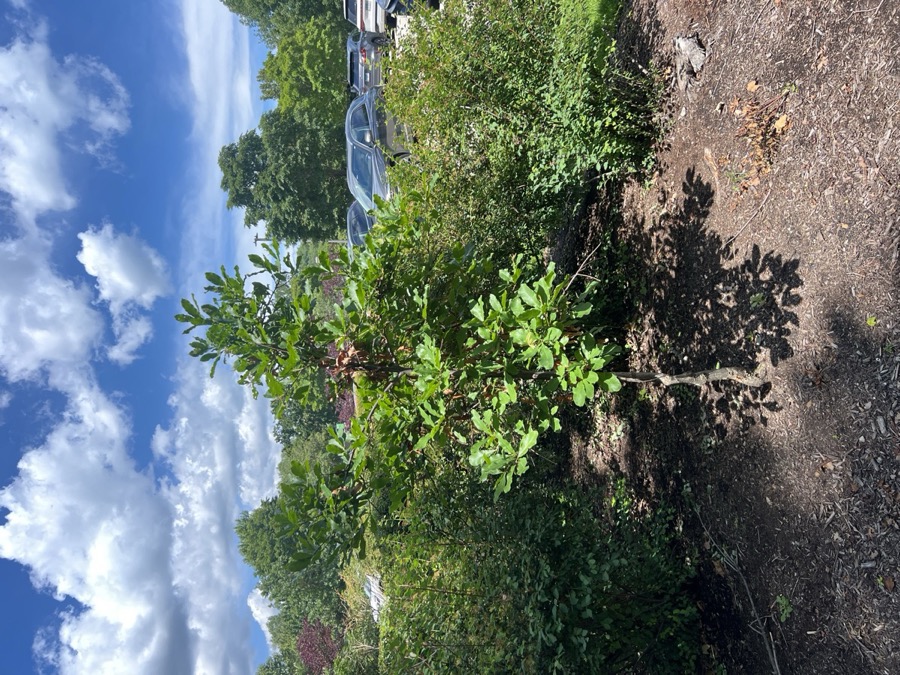
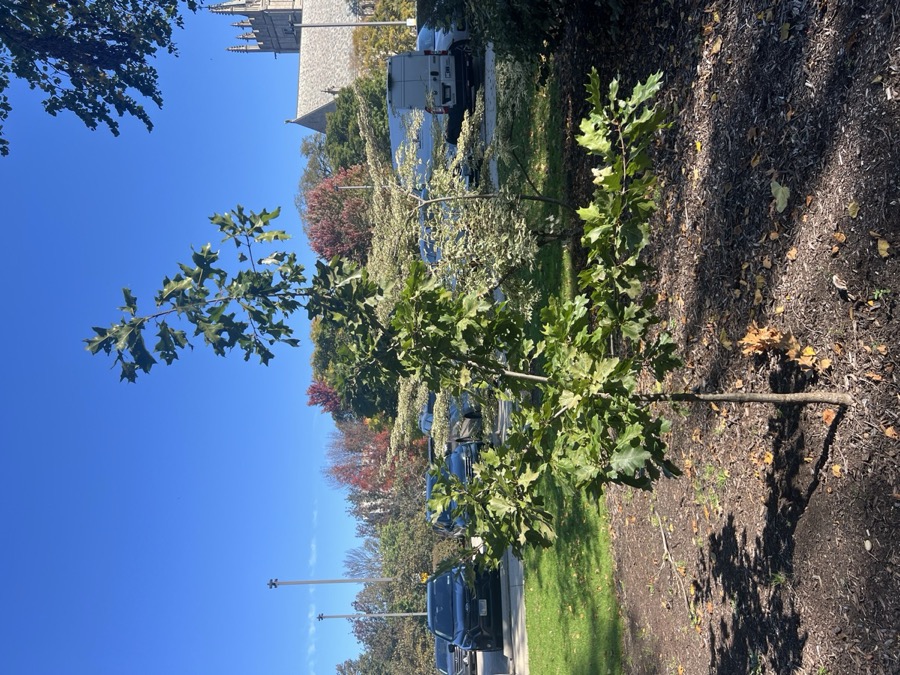
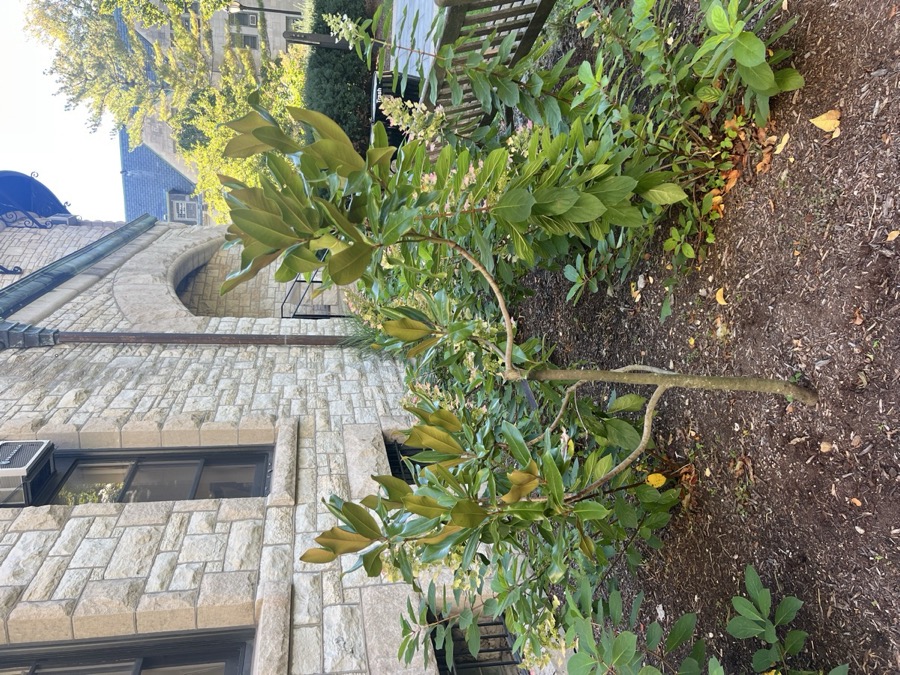
In partnership with Northwestern University’s landscape architecture and grounds team, we planted 13 experimental trees on the Evanston campus, focusing on rare and underutilized urban tree species.
Several of the species we planted are of conservation concern, including the Oglethorpe oak (Quercus oglethorpensis) and the mapleleaf oak (Quercus acerifolia), both listed as Endangered on the IUCN Red List. Growing and documenting them in an urban forest contributes to broader conservation efforts of these species.
Other species are underutilized in Chicago, and we are testing whether they are hardy enough for Chicago winters. Southern magnolia (Magnolia grandiflora) is rarely planted in the region, but as the climate changes it may become a viable option for Chicago’s urban forest. To give the magnolias the best chance, we trialed them in a protected courtyard on campus, where the surrounding buildings shelter the trees from harsh winter winds.
These outcomes are shaping how the full network operates: future plantings will pair species trials with more rigorous monitoring and data collection, so that every tree placed in an urban forest returns information about what can be grown in regional cities.
The Network
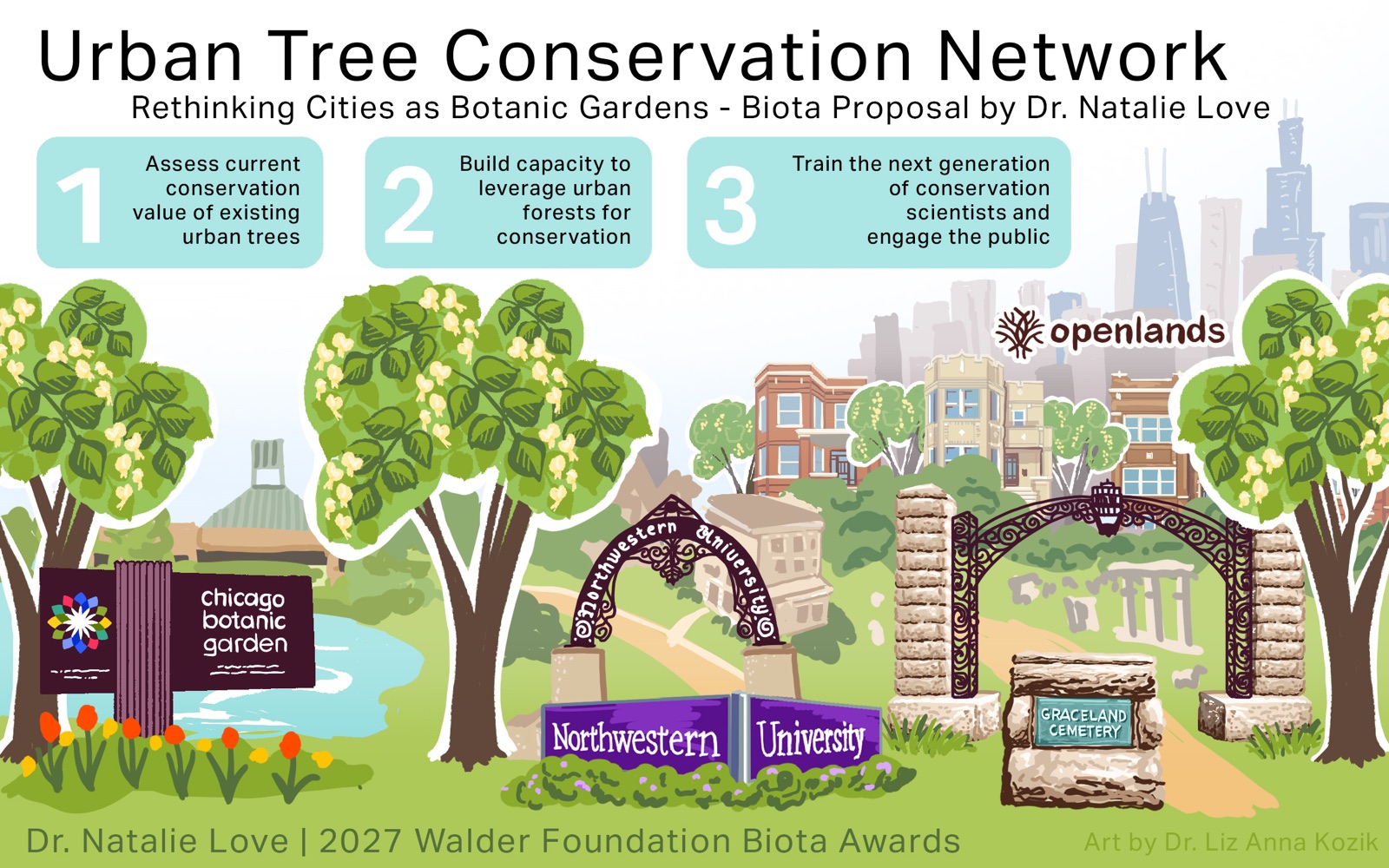
If funded, the Urban Tree Conservation Network would bring conservation scientists together with the people who actually manage urban canopy. We are working with colleagues at the Illinois Natural History Survey and the Morton Arboretum alongside three urban forestry partners:
- OpenlandsRegional conservation and urban forestry across the Chicago metropolitan area.
- Northwestern UniversityCampus urban forest and the site of our pilot planting.
- Graceland Cemetery & ArboretumA historic accredited arboretum in Chicago's North Side.
The program is built to serve both sides. Partners’ goals like diversifying canopy and conducting meaningful community outreach are supported while these urban spaces are utilized for tree conservation.
Assessing Conservation Value
Before expanding urban plantings, we need to know what they are already worth. We are comparing the genetic diversity of urban trees against regional botanic garden collections and wild populations, to learn whether urban trees conserve unique genetic variation beyond traditional ex situ approaches — or whether urban cultivation filters that variation away.
We are already putting this approach into practice with the Kentucky coffeetree (Gymnocladus dioicus), a Midwest native now planted widely across Chicagoland as a replacement for ash. Led by MS student Rew Kim, we are sampling 100 cultivated trees across an age gradient, from newly planted saplings to fully established adults, and comparing them to range-wide wild populations held in two living collections: the USDA North Central Regional Plant Introduction Station and the Brenton Arboretum in Iowa. We are also prioritizing sequencing methods that will enable standardized genetic assessment of coffeetrees across cities and regions. Together, this work will show how much wild diversity Chicago’s coffeetree plantings capture, and it provides a template for assessing the conservation value of other urban tree species in the network.
Read more about our urban forest conservation genetics work →
In the News
- The Daily NorthwesternAugust 6, 2026
This sapling is from California. The Chicago Botanic Garden planted it on campus — and it's surviving
By Cecilia Luce, Christina Lin, and Ryan Ottignon
Training the Next Generation
At every stage, this project trains and supports emerging scientists through existing educational programs at the Chicago Botanic Garden — building lasting capacity for urban conservation research and ensuring the work continues beyond any single grant cycle.